Development Tracks
The thing is, those sequences overlap. People can switch paths, if they have some moment of epiphany. Someone could go griefer to scientist (main sequence) to planner to hacker (explorer sequence). They could go opportunist to networker (minor sequence) to politician to friend (socializer sequence). They’ll tend to keep to whatever path they began on, but sometimes they decide to go a different way when they meet a fork in the road 1. Writing the sequences out linearly gives Figure 3.5.

Figure 3.5 Player development tracks.
From Figure 3.5, we can make a number of observations. It’s immediately apparent that there’s an oddity with politicians. Although people can become planners by applying knowledge they learned themselves (as scientists) or from others (by networking), for politicians only networking works as a qualification. Similarly, although planners can go on to become friends (forged through adversity) or hackers (understanding the world almost spiritually), politicians only ever go on to become friends. Designers can therefore be fairly confident that their world’s politician-friendly features should not be deeply hard-coded (because no one who experiments with them is going to use them) and that politicians should not be given too much ability to affect the physical structure of the world (because they’re never going to be attuned to it).
Another point that the development tracks show is that the elder game 2 (that is, what they do having played through the virtual world) would work best if it aimed at providing tools for people to tinker with the world or to enjoy one another’s company. Many textual worlds allow players to become builders once they’ve “won”; others provide private gathering places where players can sit and discuss the issues of the day. It’s certainly possible to have an elder game of a different kind, for example, by allowing players to repeat their time as a planner or politician in a different manner, but it’s less satisfactory for individuals that way 3. Only if the elder game is radically different from what went before will players begin development from scratch again.
Designers can take advantage of the fact that immersion is related to how far a player has proceeded in their development. Most networkers will not be deeply immersed, for example, therefore a designer could argue that it’s okay to put in immersion-breaking communication systems that facilitate networking. Most planners are immersed, therefore a designer might decide that statistical information regarding the operation of the virtual world is not available from within it: Players might know from a web site that their sword is a hackmaster +12, but when they bring it up on their inventory the number is represented descriptively or graphically instead.
As a more general comment, Figure 3.5 shows that identity paths progress in the same way; furthermore, this links directly to the 3D player interest graph (refer to Figure 3.4). The original 2D player interest graph (refer to Figure 3.1) is the same as the 3D graph (refer to Figure 3.4) with the implicit/explicit axis removed. If we take out the players/world axis instead, we get Figure 3.6.
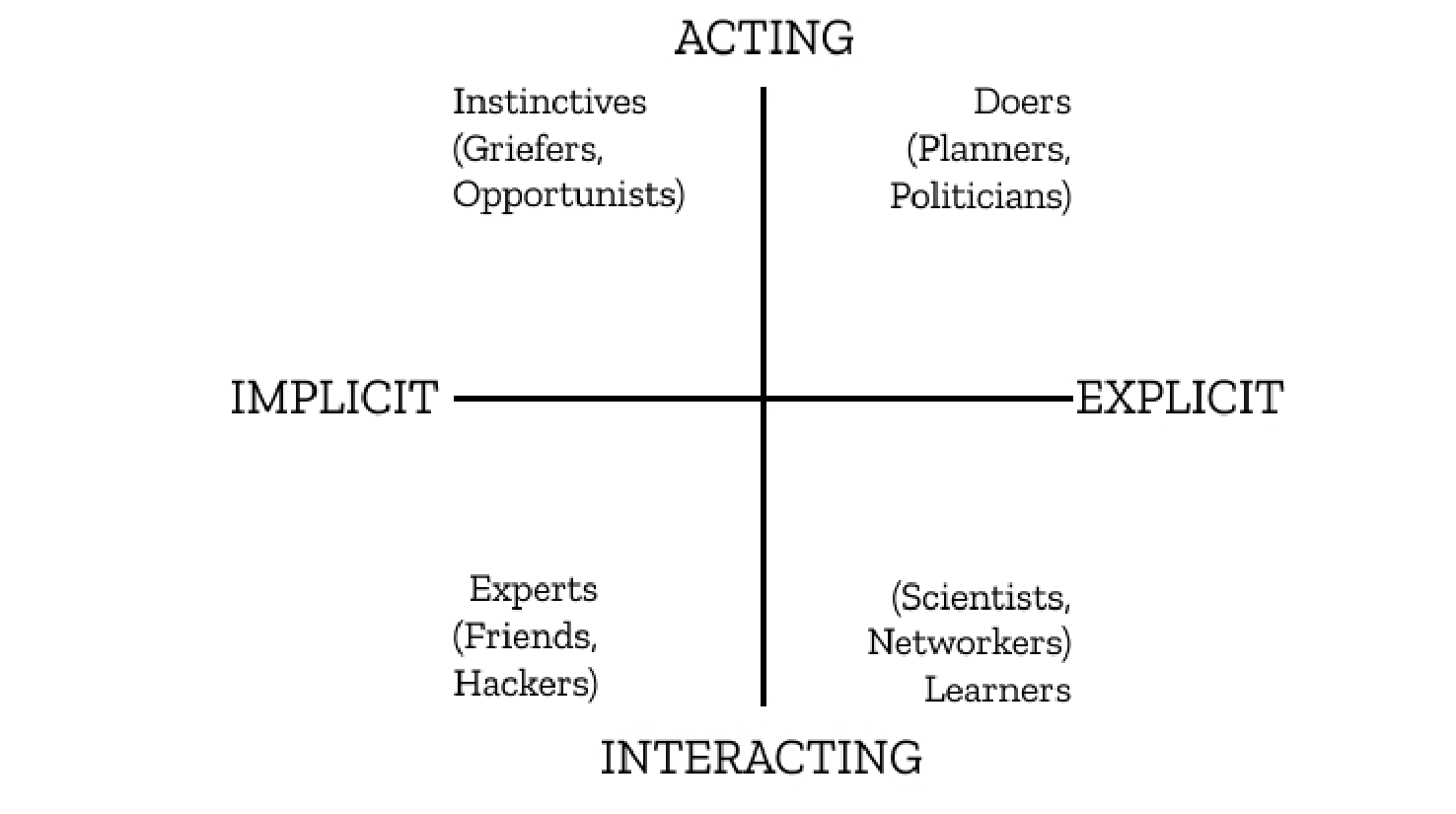
Figure 3.6 Flattened Player Interest Graph.
The player type labels for Figure 3.6 aren’t particularly important; more interesting is how players change from one to the next.
When a player arrives in a completely new situation, they have to act on instinct—there’s little else they can do. A player’s first aim is to determine the parameters that govern what they can do, which means trying everything he can think of to discover what basic actions are available. Having bootstrapped to a level where the player can reliably perform individual “primitive” actions, the next thing to do is to go about discovering sequences and combinations of these actions. The player does this methodically in a data-gathering phase, until he becomes thoroughly acquainted with the options available to them. Following this, the player applies what they have learned intensely, until eventually mastering it and it becomes second nature.
Baby arrives in the world. Baby flails about, until baby realizes how to move its legs, its arms, its feet, and its hands. Baby combines individual movements into sequences, some of which work and some of which don’t. Baby sits up. Baby toddles. Baby toddles more and more, until eventually baby can walk and run. Now, for baby, running is effectively a primitive action.
Locate, discover, apply, internalize. From acting on instinct, acquire knowledge, use that knowledge, and become able to interact on instinct.
I mention this feature of the 3D Player Interest Graph only to show how the player development tracks (refer to Figure 3.5) fit into the overall scheme. In practice, the tracks themselves are of more use to designers than the flattened graph (refer to Figure 3.6), although we’ll see later that there’s an interesting analogy that can be drawn from it.
There remains the question as to whether flattening the graph by removing the acting/interacting axis gives a useful new perspective, but it’s easily answered: No, it doesn’t. This may indicate that there are better choices for axes available which have yet to be discovered.
With that, we reach the end of this discussion of identity. There are some follow-up topics we need to look at, but we’re done with the central issue. The question might now be asked: Was it worth it? Although this analysis has produced some results of tangible use to designers, has it all really been necessary? Isn’t it, beneath the surface, just a lot of pseudo-psychological nonsense? What has it to do with design?
Directly, it contributes only in a few areas. Indirectly, it pervades everything. If you don’t understand the nature of what you’re designing, how can you design it?
People play virtual worlds to celebrate their identity. Designers must understand that. It’s a freedom thing.
Alternatively, they could completely hit a wall and bounce right back to the beginning again. Instead of developing in the face of a crisis, they could, for example, regress to some vengeful griefer state. This is, needless to say, not really what we want to see happening. ↩︎
This is another one of those terms that has come from game-oriented virtual worlds that doesn’t really have a non-game equivalent. ↩︎
This isn’t to say it wouldn’t be better for the health of the virtual world itself, of course. ↩︎